Translated from French with the help of AI; the French text prevails.
Sainfoin
Sainfoin
Onobrychis viciifolia
Zone
Colline
Altitude
300–1800 m
Position
Mostly on the adret
Flowering
May – July
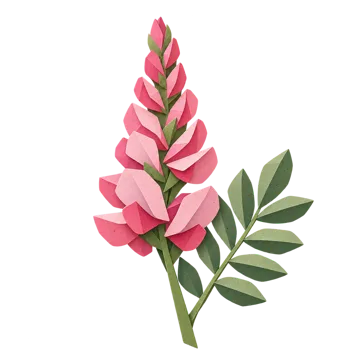
A fodder plant with conical spikes of small pink flowers veined with purple. It grows in dry meadows and sunny banks in the hills, and was often sown for cattle in the past. It copes well with drought, and its flowers feed bees.
In June, on a south-facing bank, pink spikes poke up through grass already yellowed by the sun. Up close, each small flower is striped with darker veins, and bees move from spike to spike without pause. This is sainfoin, also called esparcet.
Description
This perennial legume reaches 30 to 70 cm, according to Flora Helvetica, as cited by Info Flora. Its stems stand upright or rise in a curve. Each leaf bears 6 to 14 oval leaflets on each side and ends in a single terminal leaflet. The flowers, 10 to 14 mm long, are pink streaked with purple and are packed into elongated racemes that look like spikes. The fruit is a hairy pod 6 to 8 mm long, pitted with cells and bristling with short teeth; it stays closed and usually holds just one seed.
Habitat
Info Flora lists it in dry meadows, on alluvial ground and hillsides, from the colline to the montane zone, sometimes higher, and throughout the country; its typical habitat is semi-dry grassland, on fairly calcareous, poor soil. Yet it comes from elsewhere: native to south-eastern Europe, it is considered a neophyte in Switzerland, having arrived after 1500, and it is often found where it was sown.
Life cycle
It flowers from May to August. Agroscope credits it with fairly good drought tolerance, and Mediplant calls it a true bee pasture. Its wealth of tannins is what makes it interesting: in ruminants, these substances slow the breakdown of proteins and keep intestinal worms in check. According to the Research Institute of Organic Agriculture (FiBL), they are concentrated in the leaves; yet as the plant ages, it makes more stems and fewer leaves. For a fodder rich in tannins, it is therefore cut early, as soon as the buds appear.
In Switzerland
Sainfoin was once an important fodder in the dry regions of the country, as elsewhere in Europe; in France, it still covered 571,000 hectares in 1930, but only 20,000 in 1986. Swiss research has rediscovered it. In FiBL trials, small ruminants fed on it at will for several weeks saw their worms lay half as many eggs, and a quarter of these parasites die; on the other hand, simple pellets given as a preventive measure did not prove their worth. Agroscope has propagated ecotypes from Spiez, Erlenbach, the Diemtigtal, Hemmental and Oberehrendingen, so as to keep their seeds in long-term storage at the Changins gene bank.
Sources: Info Flora, species account (after Flora Helvetica); Mediplant, summary of the work on sainfoin 2009–2011; FiBL, Bioactualités 2/2018; Agroscope, final report of the project “Die Erhaltung der Esparsette” 2007–2010.