Translated from French with the help of AI; the French text prevails.
Arnica
Arnica
Arnica montana
Zone
Subalpine
Altitude
1000–2700 m
Flowering
June – August
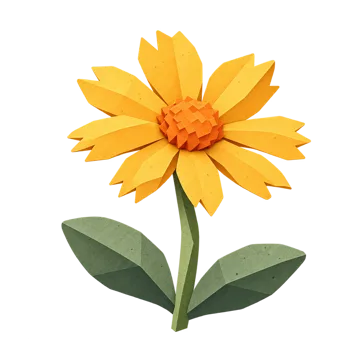
A yellow-orange flower with slightly ruffled petals, on a stem with one or two pairs of opposite leaves. It grows in poor pastures on acid soils. Long used to treat knocks and bruises, it is now protected in several cantons.
At the end of June, above the forest, a poor pasture dominated by matgrass becomes dotted with orange. Large flowers with slightly dishevelled rays rise above the short grass: mountain arnica is in bloom.
Description
Its “flower” is in fact a flower head: tiny tube-shaped flowers in the centre, strap-shaped flowers around them, all yellow-orange. According to Info Flora, it measures 4 to 6 cm across, sometimes 8, and the plant 20 to 60 cm. The basal leaves, entire and stalkless, form a rosette; the glandular stem, often forking into two branches near the top, bears only one or two pairs of leaves facing each other. These flower heads are made into skin preparations, which the European Medicines Agency accepts for bruises, sprains and muscle pain on the strength of long use rather than conclusive clinical trials.
Habitat
Arnica seeks out acid, poor soils. Info Flora reports it in meadows, pastures and waterlogged acid ground, and links it to the poor pastures where matgrass grows. In Switzerland it is found in the Alps and the Prealps, mainly in the subalpine and alpine zones, and here and there in the southern Jura, towards Neuchâtel.
Life cycle
A perennial, it spends the winter as buds at ground level and flowers from June to August. Its achenes, 6 to 7 mm long, carry a pappus of yellowish bristles, but its seeds rarely travel more than a few metres and build up no seed bank in the soil, according to the National Museum of Natural History of Luxembourg. The plant lives a long time and spreads by its rhizomes: several rosettes may be just one individual. Unable to fertilise itself, it needs many partners; the museum considers a population viable only from about 500 individuals upwards.
In Switzerland
The national Red List does not rate it as threatened, but its 2019 regional version lists it as critically endangered in the Jura and on the Swiss Plateau. Nine cantons protect it: fully Neuchâtel, Zurich and Appenzell Innerrhoden, partially Bern, Fribourg, Glarus, Obwalden, Appenzell Ausserrhoden and St. Gallen. The Luxembourg museum names its main threats: fertilised or limed meadows, but also the abandonment of grazing and late mowing, without which its seedlings die.
Sources: Info Flora, species account (after Flora Helvetica); National Museum of Natural History of Luxembourg, action plan for arnica (2009); European Medicines Agency, public summary on arnica flower (2016).