Translated from French with the help of AI; the French text prevails.
Alpine rock-jasmine
Alpine rock-jasmine
Androsace alpina
Zone
Nival
Altitude
2200–4200 m
Flowering
July – August
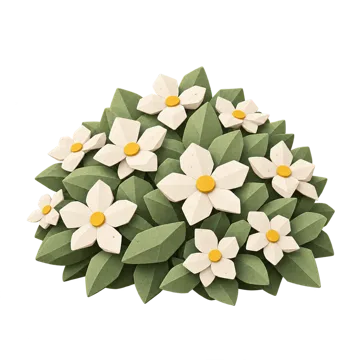
It forms small, tight cushions covered with tiny white to pink flowers. Its compact shape keeps in warmth and moisture and stands up to the wind. It grows in scree and siliceous rocks, from the alpine zone up into the nival zone.
On a grey moraine, far above the last pastures, a small dark green cushion is wedged between two boulders, dotted with pink, yellow-centred flowers: this is the alpine rock-jasmine.
Description
This member of the primrose family forms flat, tight cushions, sometimes looser ones, made up of a multitude of rosettes. According to Info Flora, its oval or lanceolate leaves measure 3 to 6 mm and, like the flower stalks, bear star-shaped hairs that split into two to eight branches. Each flower opens on its own at the tip of its stalk; its corolla, white or pink, has a yellow throat and rounded lobes. Vanoise National Park gives it a height of 1 to 3 cm and flowers 7 to 9 mm across, ranging in colour from white to purple.
Habitat
It lives only in the Alps, from France to Austria. Limestone does not suit it: Info Flora lists it in fine scree and moraines on soils that contain little of it, in the alpine zone. It has even given its name to the habitat that characterises it, high-altitude siliceous scree, which botanists call Androsacion alpinae; the glacier crowfoot grows there too. Its compact habit serves as a shelter, the Swiss National Park explains: under the dome of its leaves the wind does not get through, and both warmth and moisture stay in.
Life cycle
It is a perennial whose shoots stay above ground from one year to the next: Info Flora classes it among the chamaephytes. It flowers in July and August. Its many flowers attract insects, and the Vanoise park points out that many wild bees, which often live alone, forage right up into the alpine zone. A taproot holds it firmly, even in shifting scree. In cushion plants, the Swiss National Park also notes, the dead parts turn into humus inside the cushion itself.
In Switzerland
The Confederation protects it fully, as do Bern, Obwalden, Uri, Glarus and Ticino, according to Info Flora. The Red List rates it as not threatened in every region of the Alps; it is absent from both the Jura and the Swiss Plateau. Across the border, the Vanoise park considers its sites safe in protected areas, but exposed elsewhere to development work, notably for skiing.
Sources: Info Flora, species accounts for this species and for the glacier crowfoot; Swiss National Park, document “Anpassung der Alpenpflanzen an ihren Lebensraum”; Vanoise National Park, leaflet “L’androsace des Alpes” (2024).